Reforge just made their research agent, Ava, publicly available. We built the payment layer underneath it.
The Problem No One Is Talking About
AI agents are getting good at context understanding and tool use. They can research, write, scrape, summarize, and make decisions on their own. But the moment an agent needs to consume a paid tool, such as an API call, a model inference, a data query, a lot of prep work is still needed. Credit card needs to be setup for billing, API keys need to be binded, and the cost needs to be bounded. There’s no spending visibility until after the fact, no way to attribute cost to a specific run, and nothing stopping a runaway agent from burning through an entire monthly quota in one loop. Every new tool means another API key to manage, rotate, and secure.
Autonomous systems should be fluent. If an agent is making real-time decisions about which tools to call and how much context to gather, it needs to be able to pay for those decisions in real-time. Traditional billing tells you what an agent spent after the run is over. Agentic payment gives the agent a budget upfront and settles costs as they happen.
What We Built with Reforge
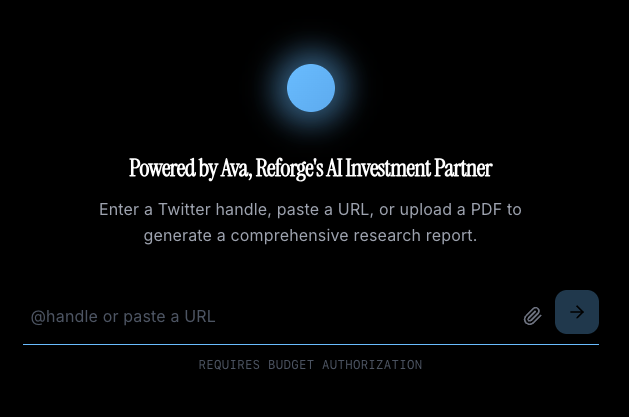
Reforge had a clear goal. Give Ava a Twitter handle, a company website URL, a DocSend link, or a PDF and she goes across the internet pulling social data, public records, GitHub repos, LinkedIn, and more to perform a fully-rounded research report. Every run consumed a different mix of resources depending on what the agent decided to do. A thin-profile founder might cost $0.30 to research. A well-documented project with a 50-page deck could cost a few dollars. The agent has the autonomy to decide how much work is needed. Each of those tool calls costs money. That’s the problem we solved.
We integrated FluxA’s agentic wallet directly into Ava’s execution loop. Here’s how it works at a high level:
Mandates. Before a research task starts, a payment mandate is created. Think of it as a pre-authorized budget. “This agent is allowed to spend up to $2.00 USDC on this task.” The user signs it once, and the agent operates within that boundary.
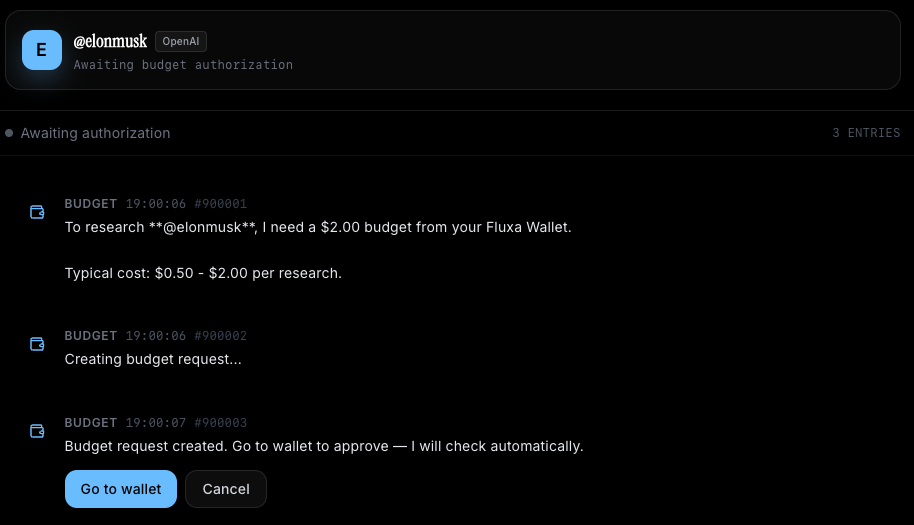
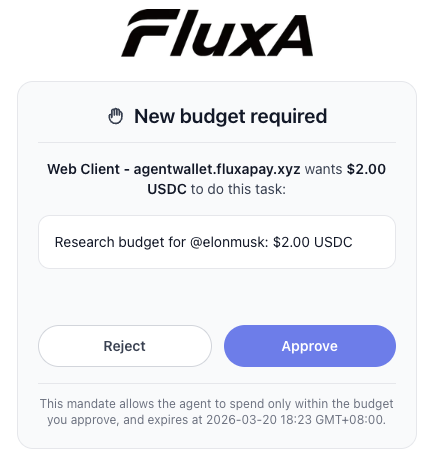
Once approved, Ava will start reasoning through which tools to call and how much data to gather:
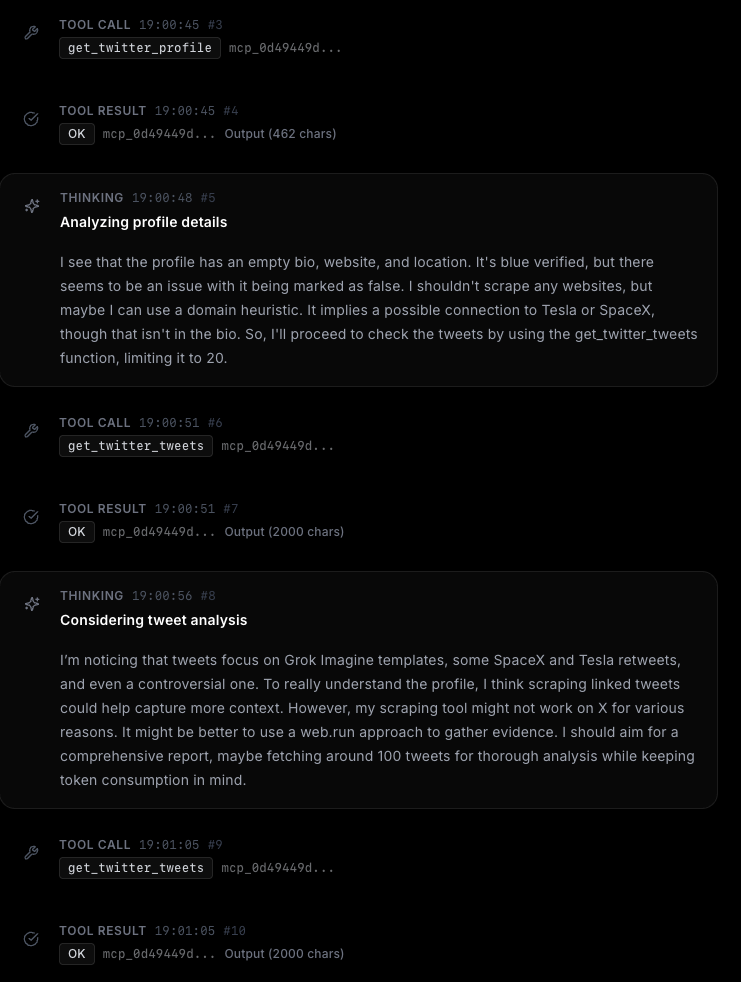
Usage-based settlement. As Ava runs, it tracks actual costs: model tokens consumed, tool calls made, storage used. When the task completes, FluxA settles the exact amount against the mandate. No overcharging nor post-hoc reconciliation.
Crypto-native rails. Settlement happens in USDC on-chain. The agent doesn’t hold funds; it operates within the mandate’s scope. The user retains full control, and every payment is auditable.
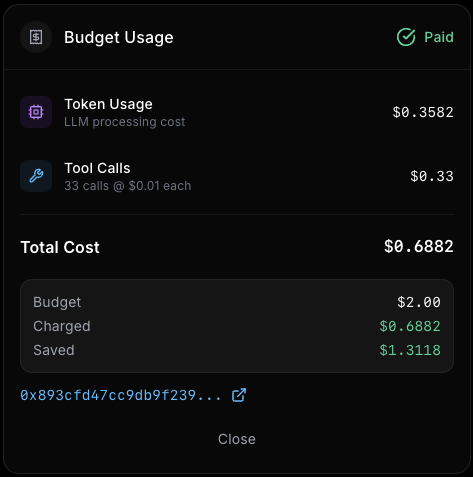
The result is that Ava's Research Agent is a fully autonomous agent with a financial boundary. The user decides what to research. The agent decides which tools to call and how deep to go. It gets charged for exactly what it uses.
Why This Matters Beyond Ava
We see Ava as a proof point for a much larger momentum shift.
Every AI agent that consumes external resources will eventually need this pattern. A coding agent that spins up cloud instances. A sales agent that pulls enrichment data. A compliance agent that queries legal databases. The moment these agents operate autonomously, the question becomes: how much and with what authorization?
The mandate pattern solves this cleanly. The agent asks for a budget, then the human sets the boundary. The agent operates within it -- settlement is exact and transparent.
We built FluxA to be that layer, for agent systems like Ava that needs financial autonomy with human oversight.
Try Ava’s Research Agent at ava-agent.reforge.vc.
Build with FluxA at fluxapay.xyz.
FAQ
How does FluxA power Ava's autonomous research?
FluxA integrates its agentic wallet directly into Ava's execution loop. Before each research task, a payment mandate sets a budget (e.g., "$2.00 USDC"). Ava autonomously decides which tools to call and how deep to go, and FluxA settles exact costs against the mandate when the task completes.
What is an agentic payment mandate?
A mandate is a pre-authorized budget for a specific task — for example, "This agent can spend up to $2.00 USDC on this research task." The user signs it once, and the agent operates within that boundary. Settlement is usage-based and exact, with no overcharging.
How is agentic payment different from traditional API billing?
Traditional billing reveals costs after execution. Agentic payment provides upfront budgets and settles costs as they happen, giving real-time spending visibility and per-run cost attribution. This prevents runaway agents from exhausting quotas and eliminates post-hoc reconciliation.
Does the mandate pattern work beyond research agents?
Yes. Any AI agent consuming external resources can use this pattern — coding agents spinning up cloud instances, sales agents pulling enrichment data, compliance agents querying legal databases. The mandate pattern provides financial autonomy with human oversight for any autonomous workflow.